How to sheet fondant with an electric dough sheeter, step by step

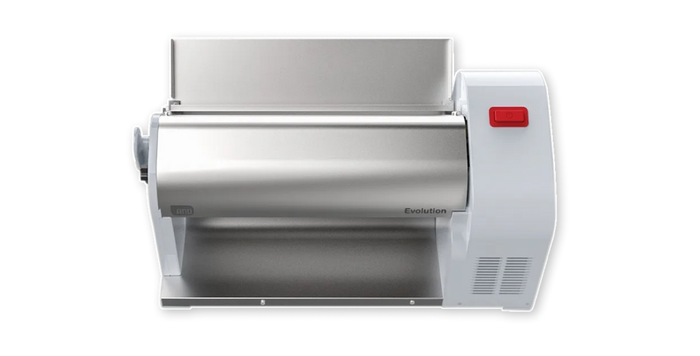
With an electric dough sheeter, fondant comes out the same thickness from edge to edge and without rolling-pin marks. The secret is in three things: preparing the paste well, lowering the thickness gradually and keeping the rollers clean and dry.
Before you start
- Knead the fondant until it is pliable and free of cracks. If it is hard, it breaks as it passes through.
- Shape it into a flat block so it goes straight between the rollers.
- Dust lightly the fondant and the rollers with cornstarch or powdered sugar. Just a little: too much dries the surface.
Step by step
- Start at the widest setting, 7 mm.
- Pass the fondant through once and close the rollers one step.
- Repeat, going down gradually. Jumping straight to a very thin setting overstretches the paste and tears it.
- Receive the sheet with your hands or on a smooth surface, without pulling it.
- Once you reach the thickness you want, cover it with plastic if you are not using it right away.
Which thickness to use
| Use | Reference thickness |
|---|---|
| Covering cakes | 3 to 4 mm |
| Figures and appliqués | 2 to 3 mm |
| Flowers and fine details (gum paste) | About 1 mm or less |
These are common reference values; adjust them to your recipe and your fondant.
Covering a large cake in one piece
The width of the sheet sets how large a cake you can cover without seams. The REVO, with 37 cm rollers, gives sheets up to 35 cm wide and as long as you need.
Common problems
- It sticks to the rollers: dust a little more and check that the fondant is not damp.
- It cracks: it is dry or cold; knead it again before passing it.
- One side comes out wider: the block went in crooked; center it before each pass.
Cleaning
Clean the rollers with the machine switched off, following the instructions in the manual.